
Things I Do To Keep My Mind Healthy
Things I'm doing lately to keep my brain healthy and counteract brainrot.
This post contains affiliate links. I may receive a commission from purchases at no extra cost to you. Read my full disclosure here.

If you watch my content on TikTok, you might have seen my mental hygiene series where I share things I do to keep my brain healthy. I have a family history of pretty serious mental illness--my mom has schizophrenia, and pretty much every woman in my immediate family except me has been diagnosed with bipolar disorder, so I am pretty adamant about taking good care of my mind to give myself the best odds as possible of not developing any severe mental illness myself.
Not only that, but keeping my brain sharp is really important to me, and lately, I've literally been able to feel my phone making me dumber. So here are all the things I've been doing lately to keep my mind healthy and counteract brain rot.
This post is all about things I do to keep my mind healthy.
Things I Do To Keep My Mind Healthy
1. I walk at least 20 minutes a day
I learned in one of my college psychology courses that research shows walking at least 20 minutes a day can be very beneficial to your mental health. It's been shown to significantly reduce depression and anxiety symptoms, and even potentially prevent symptoms for people who don't already experience them (Xu et al., 2024).
I do my walks unstimulated, so I don't listen to music or podcasts or have any form of external stimulation, besides what is going on around me. Doing this allows your default mode network to turn on, which has all kinds of benefits, including memory consolidation, increased creativity, emotional processing, etc. I've found I have my best ideas when I'm regularly giving myself time like this to let my brain wander. I've also found I feel much more clear-headed this way!
2. I take science-backed brain-boosting supplements
I am not someone who likes to take a million supplements that I don't need and that I'm just gonna pee out, but these are supplements that have a lot of good research behind them. All of the supplements I linked below are the ones I use. They're all high quality and third-party tested.
pls note I am not a medical professional and this is not medical advice; always do your own research & talk to your doctor <3
Creatine
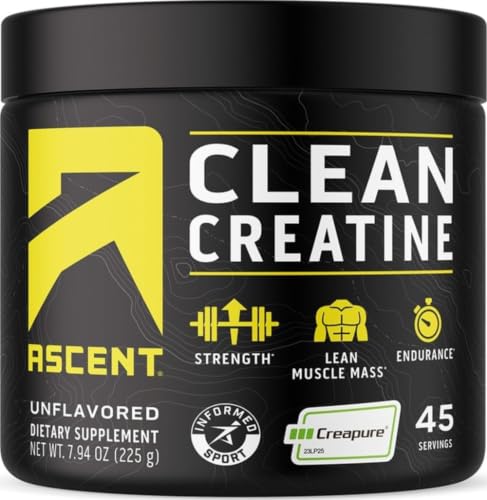
I actually just recently started taking creatine after hearing SO many good things about it, and I'm really liking it so far!
Creatine monohydrate specifically is what is research-backed. Research shows that creatine monohydrate can improve cognitive function by improving memory, attention span, and processing speed (Xu et al., 2024). It's specifically helpful for people who are experiencing stress, sleep deprivation, or vegans/vegetarians (Tokuyama, 2025).
Omega-3s

This is another supplement that I take every day that has quite a bit of research backing the cognitive benefits!
Research shows that consumption of omega-3s improves learning, memory ability, cognitive well-being, and blood flow in the brain (Dighriri et al., 2022).
There's also been some interesting research that omega-3s could decrease depression and BPD symptoms (DiNicolantonio & O’Keefe, 2020). So, if you're someone with depression or BPD, this could definitely be something to look into!
Taking omega-3s while you're young can also help protect yourself from most of the indicators of brain aging (casasn, 2022).
magnesium


Magnesium is another supplement I swear by and take every day. “Studies have shown a direct correlation between magnesium intake and cognitive function in healthy individuals...many preclinical and clinical studies have suggested the potential of magnesium as a neuroprotective agent.” (Ash, 2024).
The form of magnesium I personally take is magnesium glycinate. It's proven to help with relaxation, reduce anxiety, and provide migraine support. I get migraines and have a lot of trouble sleeping, so that's why I take this form!
Magnesium L-threonate is technically the best choice if you're looking to take a magnesium supplement for brain health/ cognitive function specifically, because it can cross the blood-brain barrier to raise magnesium levels in the brain more effectively than any other form of magnesium (Which Magnesium Is Best for Your Brain? A Guide to Choosing the Right One, 2026).
I haven't personally tried magnesium L-threonate yet because I'm happy with the benefits of magnesium glycinate, but I will probably try it at some point!
3. I don't get on my phone right before bed or right when I wake up
Sometimes I still fall into the habit of doing this, but I try REALLY hard not to. When you're going to bed, your brain goes from the beta brainwave state (the one you're in most often when you're awake), to alpha, to theta, and finally to delta. The reverse happens when you wake up in the morning. So in that time right before you're going to sleep/ right when you're waking up, you're usually in an alpha brainwave state. When you're in alpha, your critical mind is basically turned off and not filtering information, so what you see has a straight path to your subconscious mind.
The alpha brainwave state is usually the brainwave state guided meditations try to get you into, because your mind is a lot easier to program this way. This is why it is super important to be selective and cognizant of the information you're giving your brain when you're in this state. If you're scrolling social media, who knows what you're programming your brain with?
I know a lot of people find it helpful to get on their phones to help them wake up in the morning. If I absolutely had to get on my phone, I would choose to scroll a pre-made vision board on Pinterest. That way, I know I'm programming my brain with things that will actually benefit my goals.
Getting on your phone right when you wake up can also hijack your dopaminergic reward systems first thing in the day. In other words, it can make it so you're flooded with dopamine the second you wake up, and this will make you want to get on your phone more and more throughout the day, along with messing with your focus. I personally can tell a HUGE difference in my focus/ mental clarity when I don't get on my phone for the first hour of waking up, vs. when I get on it right away. When I get on it first thing, it makes me feel foggy for the rest of the day.
4. I try not to be bombarded with ads
I do this for some of the same reasons that I don't get on my phone before bed/ when I wake up.
When you're relaxing and calm, and alert but not super concentrated, your brain also goes into an alpha brainwave state. For example, this can happen if you're watching tv/ a movie. If I'm watching something on tv and ads start coming on, I will literally mute my tv and turn away and do something else. I do this because I don't want all the brand logos and lingo getting imprinted onto my subconscious mind and affecting my decision-making and purchases without me even realizing it.
5. I practice active learning/ intentionally take time to learn
I have literally been able to feel my phone making me dumber lately. I've always been a super academically motivated person. I loved school, was a valedictorian in high school, and graduated top of my class in college. However, I realized recently that with all of my scrolling and social media consumption over the past few years, I stopped actually really learning anything.
So lately I've been really making it a point to get back into studying and doing things to really expand my brain. A few things I've been doing:
- Taking free college classes on edx.org. My most recent was Harvard's Managing Happiness course.
- Reading non-fiction books on topics I'm interested in.
- Reading actual research studies and scholarly articles on things I'm curious about.
- Following creators who actually teach me things and who back up what they say with actual research.
In doing all these things, I feel like my brain is slowly starting to defrost. I've also just had a great time learning so many things recently. Learning is not only super good for your brain and neuroplasticity, but it also makes you a more interesting person when you have more things to talk about.
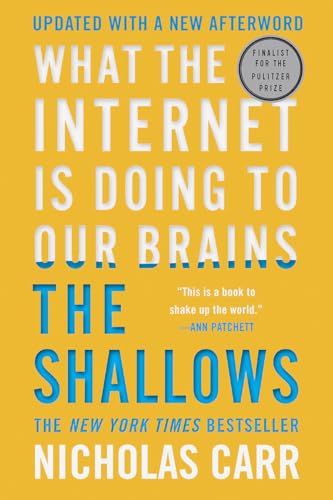
This is the non-fiction book I'm currently reading, and it is suuuuper interesting! Highly recommend.
This post was all about things I do to keep my mind healthy.
More Posts You'll Love:
Quotes That Altered My Brain Chemistry This Week
How To Change Your Life For The Better IMMEDIATELY
8 Unhinged Things I Did To Heal My Attachment Style
If you liked this post and would like to be notified of the next time I post, be sure to subscribe by hitting the button below! See you next time! 🙂
Sources:
Ash, A. V. M. D. (2024, December 29). Magnesium glycinate clinical guide: Anxiety, sleep & the NMDA switch. Fishtown Medicine Clinical Monographs; Fishtown Medicine. https://www.fishtownmedicine.com/articles/supplements/magnesium-glycinate-clinical-guide
casasn. (2022, October 6). Study links omega-3s to improved brain structure, cognition at midlife. Biggs Institute. https://biggsinstitute.org/2022/10/06/study-links-omega-3s-to-improved-brain-structure-cognition-at-midlife/
Dighriri, I. M., Alsubaie, A. M., Hakami, F. M., Hamithi, D. M., Alshekh, M. M., Khobrani, F. A., Dalak, F. E., Hakami, A. A., Alsueaadi, E. H., Alsaawi, L. S., Alshammari, S. F., Alqahtani, A. S., Alawi, I. A., Aljuaid, A. A., & Tawhari, M. Q. (2022). Effects of Omega-3 polyunsaturated fatty acids on brain functions: A systematic review. Cureus, 14(10). https://doi.org/10.7759/cureus.30091
DiNicolantonio, J. J., & O’Keefe, J. H. (2020). The importance of marine Omega-3s for brain development and the prevention and treatment of behavior, mood, and other brain disorders. Nutrients, 12(8), 2333. https://doi.org/10.3390/nu12082333
Tokuyama, E. (2025, October 22). Why everyone’s talking about creatine. UCLAHealth; UCLA Health. https://www.uclahealth.org/news/article/why-everyones-talking-about-creatine
Xu, C., Bi, S., Zhang, W., & Luo, L. (2024). The effects of creatine supplementation on cognitive function in adults: A systematic review and meta-analysis. Frontiers in Nutrition, 11, 1424972. https://doi.org/10.3389/fnut.2024.1424972
Xu, Z., Zheng, X., Ding, H., Zhang, D., Cheung, P. M.-H., Yang, Z., Tam, K. W., Zhou, W., Chan, D. C.-C., Wang, W., & Wong, S. Y.-S. (2024). The effect of walking on depressive and anxiety symptoms: Systematic review and meta-analysis. JMIR Public Health and Surveillance, 10, v10i24e48355. https://doi.org/10.2196/48355